Situation
You specify 36 V LiFePO4 packs for two distinct application families: Traction — golf carts, LSEVs, sightseeing boats, utility vehicles — where hill-climb surge tolerance, acceleration current, and drop-in mechanical fitment decide uptime; and Energy Storage (ESS) — marine hybrid propulsion + house loads, 36V DC telecom backup, off-grid solar banks — where calendar life, float stability, and sustained discharge under continuous loads dominate. Both need drop-in footprints (for traction), charger compatibility, and batch-to-batch consistency.
The Challenge
Most suppliers pigeonhole 36V as 'golf cart only' and sell traction-tuned BMS for everything. ESS applications with traction BMS drift on float voltage, killing calendar life in marine hybrid or telecom backup. Traction applications with ESS-tuned BMS cut out on hill climbs and acceleration spikes. Cheap packs use storage-grade cells for traction, inconsistent grading across batches — every new fleet program restarts qualification from zero.
How do you source a 36 V LiFePO4 platform that serves BOTH traction and ESS duty — with the right BMS profile, cell grade, and mechanical fit for each — without qualifying two different suppliers?
Our Answer
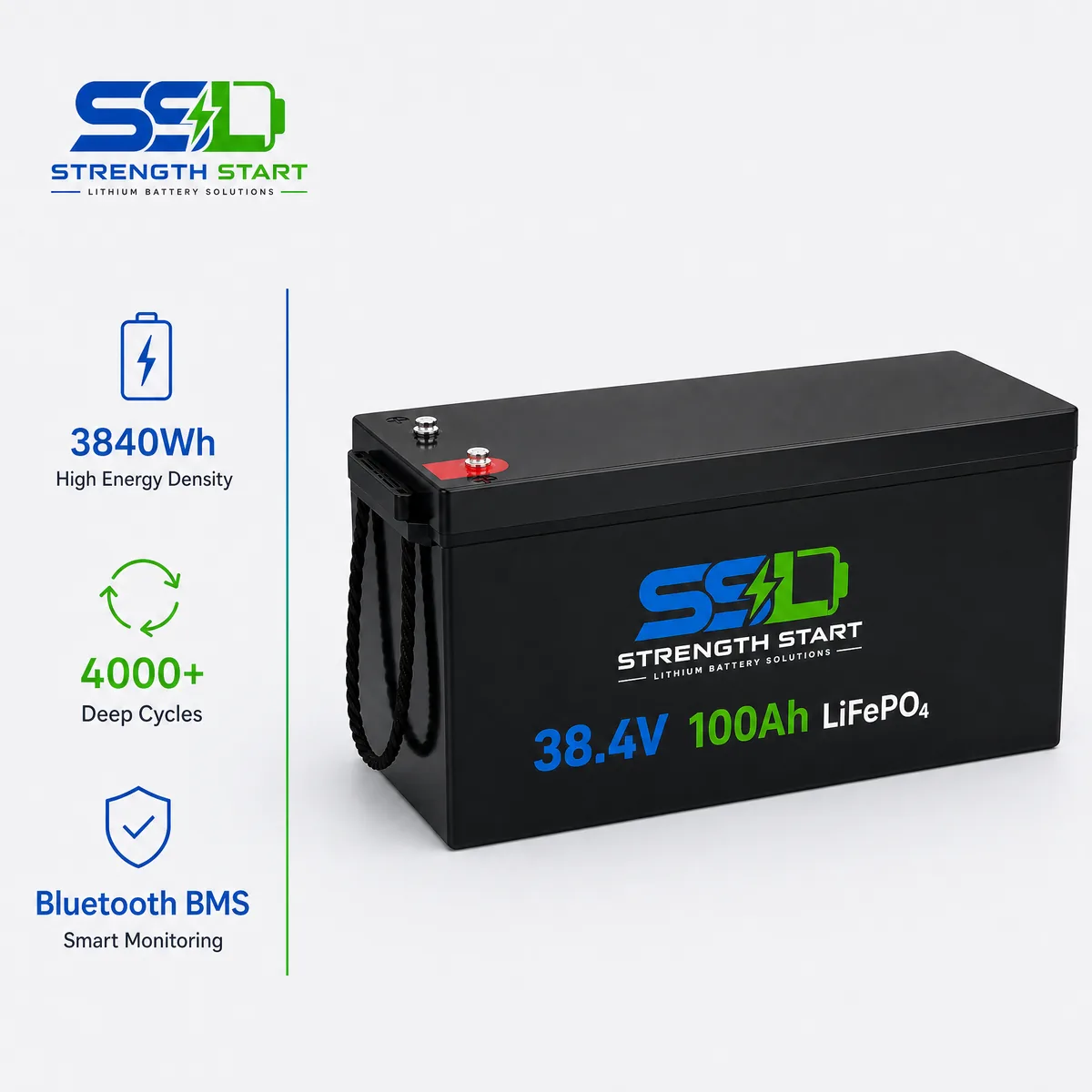
SSLBATT 36 V packs are a single voltage platform with two factory-validated BMS profiles: Traction Profile (surge-rated, hill-climb overcurrent windows, high-discharge cells, thermal logic for summer heat) and ESS Profile (float/backup tuned, calendar-life cells, precise float voltage, sustained discharge capability). Both share traceable Grade A cells, drop-in footprints for common 36V trays, low-temp charge gating, and per-batch test docs. Poland Local Warehouse supports 3–7 Days DDP for EU programs. You qualify the platform once; we tune the profile to your duty cycle.
Cell Selection by Duty Cycle
We select cells matched to your application: Traction — high-discharge prismatic cells rated for vehicle discharge profiles, not storage duty. Incoming acceptance testing and pack-level formation matching keep capacity and internal resistance consistent — so batch 50 behaves like batch 1 and hill-climb performance is repeatable. ESS — calendar-life optimized cells with low self-discharge for float/backup duty.
Dual BMS Profiles: Traction vs ESS
Before sampling, we validate which duty cycle your application follows. Traction Profile: overcurrent windows sized to your controller's peak and surge draw, balancing and thermal logic matched to your climate — eliminating the nuisance-trip failure mode that plagues generic packs. ESS Profile: float voltage, balancing strategy, and low-temp protection tuned for marine hybrid, 36V DC backup, off-grid solar — maximizing calendar life and float stability. Both share CAN/RS485 communication and low-temp charge gating.
Conversion Path & EU Delivery
Footprints, terminals, and connectors map to common 36 V golf cart and LSEV trays, so fleets convert without fabrication. For ESS applications, custom enclosure options available. Compliance docs (CE, UN38.3, MSDS) are aligned during technical review, and Poland Local Warehouse supports 3–7 Days DDP replenishment.
SSL 36 V LiFePO4 battery packs are engineered for B2B programs where consistency matters more than marketing claims. Voltage is the platform — BMS profile and cell selection adapt to your duty cycle. We build packs for both traction (golf, LSEV, marine) and ESS (marine hybrid, 36V DC backup, off-grid) applications where sustained power, drop-in fitment, and repeatable BMS behavior across production batches decide fleet uptime and user satisfaction.
Where It Fits Best
| Application Type | Typical Use Cases | Why 36V Fits |
|---|---|---|
| Traction | Golf carts, LSEV, ATV, utility vehicles, resort fleets | Hill-climb-tuned BMS sustains full power on grades; high-discharge cells handle acceleration spikes; drop-in footprints reuse trays/connectors |
| Energy Storage (ESS) | Marine hybrid propulsion + house loads, 36V DC telecom backup, off-grid solar banks | Float-tuned BMS maximizes calendar life; sustained voltage under continuous discharge; calendar-life cells for float/backup |
| Sightseeing Boats & Trolling Motors (Both) | All-day operation with predictable range | Sustained voltage under continuous discharge; can be tuned for traction or hybrid ESS duty |
| AGV/AMR & Commercial Cleaning (Traction) | Defined charging windows, predictable duty cycles | Smart BMS configuration aligns with scheduled charge windows; drop-in fitment |
Voltage Comparison: ESS vs Motive by Platform
| Parameter | 12V | 24V | 36V (This Page) | 48V | Custom |
|---|---|---|---|---|---|
| Nominal Voltage | 12.8 V | 25.6 V | 38.4 V | 51.2 V | 6–72 V+ |
| Power Range | <3 kW | 3–5 kW | 3–5 kW | 5–15 kW | Any |
| ESS Typical Use | Solar backup, telecom, security, UPS | Telecom backup, solar storage, C&I | Marine hybrid, 36V DC backup, off-grid | Home ESS, C&I, solar self-consumption | Grid-scale, container ESS, HV backup |
| Motive Typical Use | AGV/AMR, robotics, marine, portable | Forklift, AGV, floor scrubbers | Golf cart, LSEV, sightseeing boat | 48V golf, forklift, marine, EV conversion | Heavy EV, bus, mining, locomotive |
| EU Stock | Poland Warehouse | Poland Warehouse | Poland Warehouse | Poland Warehouse | Made to order |
Engineering Fit Check
Inputs we validate
| Input | Why it matters |
|---|---|
| Vehicle/model and controller peak/surge draw (Traction) | Sizes overcurrent windows to real hill-climb and acceleration events — prevents nuisance trips. |
| Application type: Traction (golf/LSEV/boat) or ESS (marine hybrid/backup) | Selects correct BMS profile and cell grade. |
| Charger model and voltage/current settings | Aligns charge profile and cut-off voltages before samples are released. |
| Tray dimensions and terminal layout (Traction) | Confirms drop-in fit so fleets convert without fabrication. |
| Duty cycle, climate, and communication needs (CAN/RS485) | Controls derating, low-temperature protection, and telemetry integration. |
BMS protection logic
| BMS item | Engineering purpose |
|---|---|
| Overcurrent windows sized to vehicle surge events | Rides through hill-climb and acceleration spikes without cutting power. |
| Thermal safeguards and derating behavior | Protects the pack through back-to-back rounds in summer heat. |
| Charge limits and low-temperature cutoffs | Preserves cell health for outdoor fleets operating through winter. |
| Balancing strategy | Stabilizes SOC so every cart in the fleet delivers the same range. |
Compliance and EU Delivery
We align documentation for UN38.3 / CE / MSDS (as applicable), labeling, and logistics readiness.
For European customers, Poland Local Warehouse planning can support 3–7 Days DDP replenishment for qualified deployments.
Frequently Asked Questions - 36 V LiFePO4 Battery Packs
Will the pack cut out on hills or during hard acceleration?
With Traction Profile: no. We build with high-discharge prismatic cells and validate overcurrent thresholds and delay windows against your controller's peak draw before sampling, so surge events ride through without nuisance trips.
Is it a true drop-in replacement for lead-acid 36 V systems?
Yes for traction. Footprints, terminal layouts, and charge profiles align to common golf cart and LSEV platforms, so existing trays, chargers, and connectors are reused. For ESS applications, custom enclosure options available. Share your model and charger to confirm fit and charge-profile alignment.
What else does a full conversion need besides the battery?
Typically the pack, a compatible charger profile, and optionally a state-of-charge display or DC-DC converter for 12 V accessories. We map the complete conversion list against your vehicle model during the fit check.
What is the delivery time for 36 V packs to EU countries?
Poland Local Warehouse supports 3–7 Days DDP replenishment for qualified recurring programs. Standard lead time is 2–3 weeks for new programs including BMS configuration.
What certifications do your 36 V packs carry?
Standard documentation includes CE, UN38.3, and MSDS. Additional certifications can be aligned during technical review.
What is the warranty period?
SSLBATT 36 V packs carry a standard warranty covering manufacturing defects and capacity retention above 70%. Extended options are available for qualified OEM programs.
36 V vs other voltages - how to choose?
36 V (38.4 V nominal) suits both traction (golf, LSEV, boat) and ESS (marine hybrid, 36V DC backup, off-grid). 12 V suits compact systems under 3 kW. 24 V suits mid-power telecom/solar ESS and material handling. 48 V suits higher power (5–15 kW) for home ESS, C&I, and high-power motive. Choose by power range and duty cycle — not by application label.